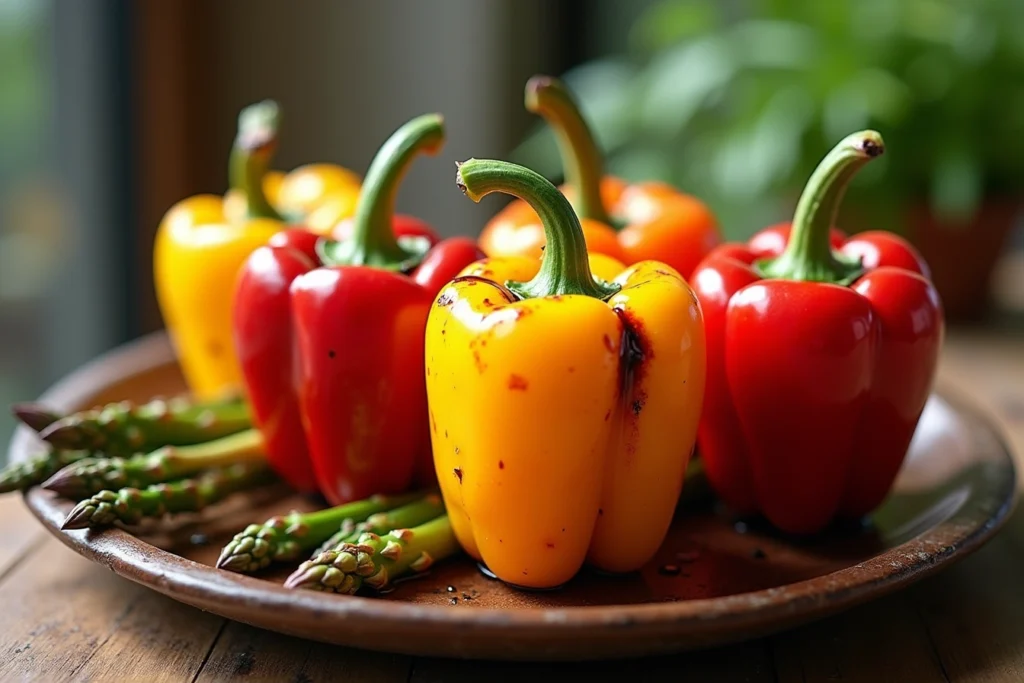

Hi, I’m Hannah! If there is one thing that gets me instantly excited for the shift in seasons, it is the smell of a hot grill fired up on a warm evening. Welcome back to another beautiful spring and summer cooking season! If you are new here and want to learn a little more about my food philosophy, you can head over to my About page. I firmly believe that eating nourishing, real food should never feel like a chore—it should feel like a joy. And nothing embodies that philosophy quite like these Balsamic Glazed Rainbow Peppers and Asparagus. When we think of summer cookouts, the side dishes are often an afterthought. We put so much effort into the main event that the vegetables end up being a boring, uninspired afterthought. But I promise you, this grilled peppers and asparagus recipe is going to completely steal the show. It is vibrantly colorful, incredibly easy to pull together, and features the most mouthwatering balance of smoky, charred edges and a sweet, sticky balsamic glaze. Whether you are hosting a weekend backyard barbecue or just need a lightning-fast side dish for a busy Tuesday night, this 15-minute recipe proves that wholesome, plant-based eating can be spectacularly delicious.
Why You’ll Love This Grilled Veggie Side Dish
There are so many reasons this recipe will become a permanent fixture in your warm-weather dinner rotation. Here is why you are going to fall in love with it:
- Quick & Easy: Let’s be honest, nobody wants to spend hours in a hot kitchen during the beautiful spring and summer months. This entire recipe goes from cutting board to table in just 15 minutes, making it the ultimate low-effort, high-reward dish.
- Incredible Sweet & Smoky Flavor: Grilling vegetables naturally draws out their inherent sweetness, but when you pair that smoky grill char with a rich, tangy balsamic vinegar, the flavors multiply. The balsamic actually caramelizes right on the hot veggies, creating a sticky, savory-sweet glaze that is absolutely irresistible.
- Packed with Plant-Based Nutrition: This side dish is naturally vegan and gluten-free, making it incredibly inclusive for all your dinner guests. Beyond that, it is loaded with vibrant antioxidants, gut-friendly dietary fiber, and essential vitamins that leave you feeling energized and deeply nourished.
- Perfect for Healthy Meal-Prep: One of my favorite things about these veggies is how beautifully they keep in the fridge. You can grill a massive double batch on Sunday afternoon and use the leftovers all week long. They are fantastic tossed into a cold pasta salad, layered into wraps, or served chilled over a bed of quinoa for an easy weekday lunch.
Key Ingredients & The “Why” Behind Them
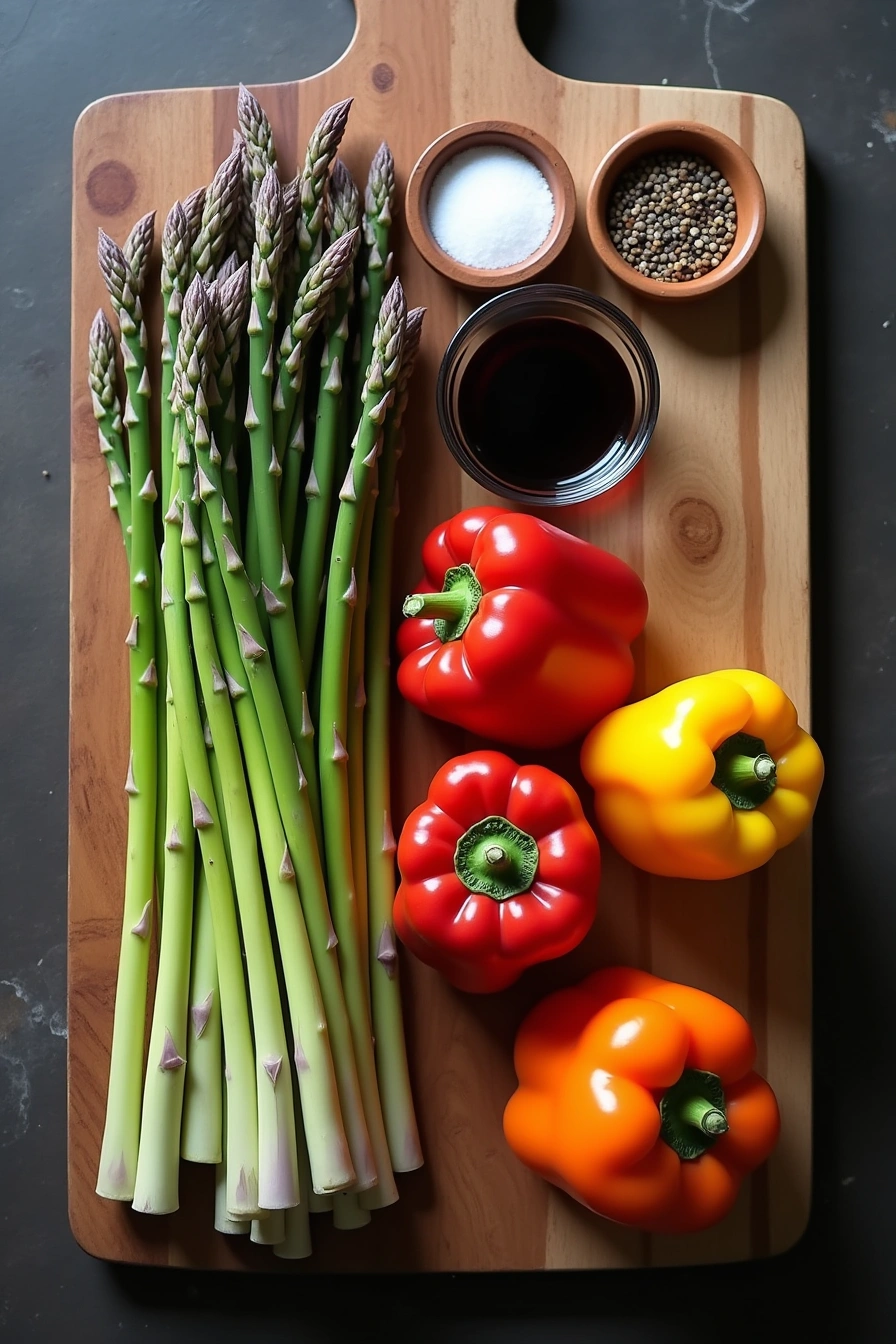
I always love taking a moment to talk about exactly what goes into our food. When you understand the purpose of each ingredient, cooking becomes so much more intuitive. Here is everything you need for this recipe:
- Rainbow Bell Peppers: I highly recommend grabbing a mix of red, yellow, and orange bell peppers for this dish. Not only do they look beautiful, but they are significantly sweeter than green peppers. According to Healthline, bell peppers are exceptionally rich in vitamin C and powerful antioxidants, which are vital for glowing skin and a strong immune system.
- Fresh Asparagus: The star of the spring harvest! We are using fresh spears with the woody ends snapped off. Asparagus is a fantastic source of folate, vitamin K, and prebiotic fiber, which acts as fuel for the healthy bacteria in your gut. On the grill, it develops a perfectly tender-crisp bite.
- Extra Virgin Olive Oil: This is essential for preventing the vegetables from sticking to the hot grill grates, but it also serves a nutritional purpose. The heart-healthy fats in olive oil actually help your body absorb the fat-soluble vitamins (like vitamins A and K) found in the peppers and asparagus!
- Balsamic Vinegar: This is where the magic happens. We are using a good quality balsamic vinegar to provide a sharp, tangy acidity that balances the natural sweetness of the bell peppers. When it hits the hot vegetables, the sugars in the vinegar reduce into a glorious glaze.
- Garlic Powder: While I love fresh garlic, garlic powder is actually much better for grilling. Fresh minced garlic will burn and turn bitter at high grill temperatures, whereas garlic powder adheres perfectly to the veggies and provides a smooth, savory depth of flavor.
- Sea Salt & Black Pepper: The absolute essentials. A generous pinch of coarse sea salt helps draw out the moisture in the vegetables so they can blister and char rather than steam, while black pepper adds a subtle, earthy kick.
Substitutions & Variations for Grilled Vegetables
The beauty of this recipe is how wildly versatile it is. Feel free to use this method as a baseline and get creative with whatever you have in your fridge!
- Swap the Veggies: This balsamic glaze method works beautifully on almost any hearty summer vegetable. Try adding thick slices of zucchini, yellow summer squash, portobello mushrooms, or wedges of red onion to the mix.
- No Outdoor Grill?: No problem at all! You can easily make this recipe indoors using a cast-iron grill pan on your stovetop. Keep the heat at medium-high and make sure your overhead fan is on, as the balsamic can get a bit smoky as it caramelizes.
- Add Fresh Herbs: To brighten up the dish even more, toss the warm vegetables with a handful of fresh torn basil, chopped parsley, or fresh thyme right before serving. The residual heat will release the oils in the herbs, making your kitchen smell divine.
- Cheese Optional: While this recipe is naturally vegan, if you tolerate dairy, a sprinkle of crumbled feta cheese, creamy goat cheese, or shaved parmesan over the top just before serving adds an incredibly decadent, salty finish.
Expert Tips for the Best Grilled Peppers and Asparagus
Grilling vegetables might seem foolproof, but there are a few simple tricks that make the difference between soggy, steamed veggies and perfectly charred, restaurant-quality sides. Keep these tips in mind:
- Cut the Peppers into Thick Strips: Do not slice your bell peppers too thin, or they will quickly turn into mush and slip right through the grill grates. Cut them into wide, chunky quarters or halves. This ensures they maintain a crisp texture while developing those beautiful grill marks.
- Place the Asparagus Perpendicular to the Grates: This is a simple but crucial tip! Lay your asparagus spears across the grill grates horizontally, rather than parallel to the bars. This completely prevents the tragedy of losing half your precious asparagus to the fiery coals below. Alternatively, you can use a grill basket!
- Don’t Add the Balsamic Too Early: Because balsamic vinegar contains natural sugars, it will burn quite quickly over an open flame. Toss the vegetables in oil and spices first, grill them until they are almost fully cooked, and then drizzle the balsamic over them during the very last 1 to 2 minutes. This creates a glaze without burning.
How to Store & Reheat Grilled Veggies
As I mentioned, these veggies make for brilliant leftovers. Here is how to keep them tasting fresh and vibrant all week long.
- Fridge Storage: Allow the leftover vegetables to cool completely to room temperature. Transfer them to an airtight glass container and store them in the refrigerator for up to 4 to 5 days. The balsamic flavor actually deepens as they sit!
- Freezer Storage: While you technically *can* freeze grilled vegetables, I do not recommend it. The high water content in bell peppers and asparagus means they will become quite mushy and lose their wonderful crisp-tender bite once thawed. These are definitely best enjoyed fresh from the fridge.
- Reheating Instructions: To reheat, simply toss the vegetables in a skillet over medium heat for 3-4 minutes until warmed through. You can also pop them into an air fryer at 350°F for about 3 minutes to help revive some of those crispy charred edges. Or, simply eat them cold right out of the fridge—they are amazing in salads!
What to Serve With Balsamic Glazed Asparagus and Peppers
This side dish is incredibly versatile and plays well with almost any summer dinner spread. Here are a few of my favorite ways to serve it:
- Alongside Grilled Proteins: Keep the grill going and serve these veggies next to my Easy Sheet Pan Chicken Fajitas (adapted for the grill!) or alongside a beautifully charred flank steak or flaky salmon filet.
- In a Summer Grain Bowl: Chop up the leftover grilled vegetables and toss them over a base of cooked quinoa, farro, or brown rice. Add a scoop of hummus and a squeeze of fresh lemon juice for a high-protein, fiber-packed vegan lunch.
- Tossed into Pasta: For an effortless weeknight dinner, boil your favorite gluten-free or whole wheat pasta, toss it with a little olive oil, garlic, and red pepper flakes, and fold in these balsamic glazed veggies.
- On a Loaded Sandwich: Layer cold slices of the grilled bell peppers and asparagus onto crusty sourdough bread with a thick slathering of pesto or herbed cream cheese for the ultimate vegetarian sandwich.

Ingredients
Method
- Preheat your outdoor grill to medium-high heat (about 400°F). Make sure the grill grates are clean.
- In a large mixing bowl, toss the prepped asparagus spears and thick bell pepper pieces with the olive oil, garlic powder, sea salt, and black pepper until completely coated.
- Place the vegetables directly onto the grill grates. Lay the asparagus horizontally across the grates so they don’t fall through. Grill for 8-10 minutes, turning once halfway through, until the vegetables are tender-crisp and have nice char marks.
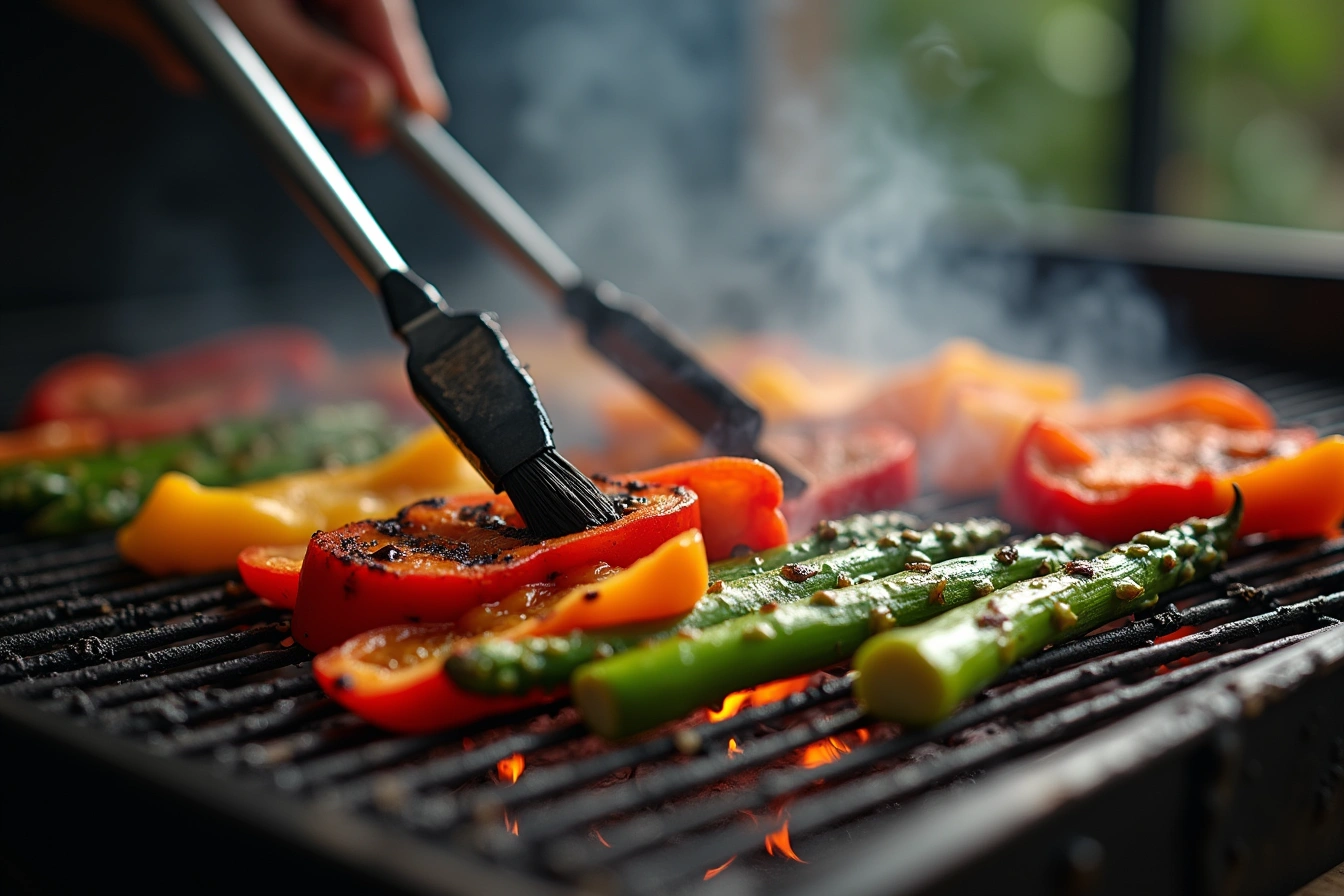
- During the last 1 to 2 minutes of grilling, quickly brush or drizzle the balsamic vinegar evenly over the hot vegetables. Let it bubble and caramelize briefly, being careful not to let the sugars burn.
- Remove the vegetables from the grill and transfer to a serving platter. Drizzle with a tiny bit more fresh balsamic vinegar if desired, and serve warm!
Notes
• Thicker cuts are better: Cut your bell peppers into wide strips or quarters. Thin strips will burn too quickly and lose their crunch.
• Indoor cooking: You can easily make this indoors using a cast-iron grill pan over medium-high heat.